I share my story because it just might help another first-time mom save their baby. LADIES, IF YOU …

I share my story because it just might help another first-time mom save their baby.
LADIES, IF YOU ARE IN THE EARLY STAGES OF YOUR FIRST PREGNANCY, PLEASE FAMILIARIZE YOURSELF WITH THE TERM “INSUFFICIENT CERVIX”. THIS CONDITION CAN ONLY BE DETECTED DURING PREGNANCY AND EVEN THEN, DIAGNOSIS CAN BE DIFFICULT. AMONGST OTHER SYMPTOMS, IF YOU EXPERIENCE CONSTANT PELVIC PAIN (AS IN MY CASE), INSIST THAT YOUR DOCTORS EXPLORE THE CAUSE, DO NOT LET THEM SIMPLY CHALK IT UP TO A GROWING STOMACH. ONCE DIAGNOSED, THERE ARE A NUMBER OF OPTIONS TO SUPPORT YOUR CERVIX INCLUDING A CERCLAGE, SUTURES TO HOLD THE UTERUS CLOSED. IF IT IS DETERMINED THAT A CERCLAGE IS YOUR BEST OPTION, THE PROCEDURE TYPICALLY NEEDS TO BE DONE BY WEEK 14 OF PREGNANCY SO TIME IS ABSOLUTELY OF THE ESSENCE.

In my naïveté of pregnancy, I always thought that once you completed your first trimester, you were in the clear. My prenatal visits always went well. I was healthy and so was baby. We would watch her moving around on the ultrasound and listen to the sweet music that was her heartbeat, I had no cause for concern.
As I entered the second trimester, I began experiencing constant pelvic pain. I was vocal about it, but my Obgyn always maintained that it was simply my ligaments stretching and organs shifting to make room for a growing uterus.
Fast forward to 2 nights prior to my baby’s passing. I lay in a hospital bed, admitted because I had started leaking amniotic fluid, as the doctor informed me that I had what was called an “Insufficient Cervix”. It had already dialated and all we could do at that point was keep me on bed rest to try to keep the baby inside as long as possible. A Cerclage was no longer an option at this stage.

THE LESSON HERE IS THAT WHILE WE RELY ON OUR DOCTORS TO BE THE EXPERTS, IT IS UP TO US TO DO OUR OWN RESEARCH AND KNOW YOUR OPTIONS BEFORE IT’S TOO LATE.

#shareyourstory #earlypregnancy #incompetentcervix

My child walks on her toes. Should I be concerned

You wanted to know if it’s concerning or not that your child has begun to walk on her toes. And this is, ultimately, an observation to bring up with the pediatrician if it persists. Sometimes it’s just a phase that kids go through, but if it does last for a while, then talk with the pediatrician, especially if you’ve made other observations that are a little concerning to you. In most cases, kids just do it, no one knows why, there’s not a concerning underlying cause. But in some cases, it is due to something and this is why it’s worth bringing up.

You can expect the pediatrician to ask questions about birth history, about their overall health history, about family history, as well as the age your child was at when he or she started walking. They may also ask about and examine your child for strength differences between one side or the other, and this will help them determine if further investigation is warranted. In some cases, toe-walking is related to things like cerebral palsy, peripheral neuropathy, and autism spectrum disorders. But this isn’t to say that if your child is a toe-walker that these are absolute diagnoses.

Again, it’s good, if it’s been a recent observation, to just watch for a little while and see if it persists. And if it does, talk with a doctor and they’ll be able to give you tailored information and advice. If you have more questions in the future for me, feel free to ask them on our Intermountain Moms Facebook and Instagram pages, and recommend us to your friends and family too.

Pregnant and feeling comfortable are the two most uncommon things They just dont go ha…

Pregnant and feeling comfortable are the two most uncommon things 😫😩👈🤰😅💖💙♥️💕❣️
They just don’t go hand in hand. Some pregnant women have nausea, some go through the #hyperemesisgravidarum which is what I suffered from all through 9 months!!! Yep 😩😫 Who can relate to this👈👶🏻🤰
.
.
.
#pregnancy #pregnancydilemma #pregnancyproblems #twinpregnancy #earlypregnancy #earlypregnancysymptoms #earlypregnancyloss #earlypregnancyscan #earlypregnancydays #earlypregnancylossawareness #2ndtrimester #secondtrimester #thirdtrimester #thirdtrimesterproblems #gestationaldiabetes #gestationaldiabetesdiet #gestationaldiabetespregnancy @ultrasound_diagnostic_centre we do #alltypes of #ultrasound #scans #growthandwellbeingscan #weekendappointments #availableappointments

Can genetics affect my milk supply

The amount of milk a woman makes when feeding her baby is due to many different factors, and they’re largely circumstantial rather than genetic. You wanted to know, specifically, if your mom was an over-producer or an under-producer (or maybe your sisters have had issues with supply, being over- or under-producers), if that will be the case for you too. The short answer is not necessarily, and here’s why. The largest factors that affect milk production are:
– The frequency at which the breast is emptied by either nursing or pumping.
– The baby’s latch and how efficient the baby is at emptying the breast when they nurse.
– A history of breast surgery may affect a woman’s supply, especially breast reductions, because during surgery, the mammary glands can be affected and, thus, affect a woman’s ability to make milk.
– And then sometimes, women are on medications that affect supply.

There are many other factors too, but ultimately, it’s circumstantial, so if your family has had issues with it, then you can turn to them if you have the same problems, because they’ll probably have some ideas on how to help you and support you, but it doesn’t necessarily mean that you will have the same problems. If you have any issues with breastfeeding, be sure to talk with your pediatrician so you know how to meet your baby’s needs while you work through those issues, and also see a lactation specialist who can talk with you one on one and offer you tailored information and advice. If you have more questions in the future for me, feel free to ask them on our Intermountain Moms Facebook and Instagram pages, and recommend us to your friends and family too.
Have you had dysgeusia in pregnancy How long did it last and what helped you to alleviate itWhile…

Have you had dysgeusia in pregnancy? How long did it last and what helped you to alleviate it?
While I have not had any nausea or food aversions, as of yesterday I have had a horrible bitter/sour/metallic flavor on my tongue that is there whether I am eating or not. I had no idea that this was a regular symptom of pregnancy caused by hormones (shocker), and mainly by estrogen. Estrogen is high in pregnancy to help the baby’s development of organs and to regulate bone density. So while it now sucks to eat anything I am grateful to have a confirmation that my hormones are doing what they are supposed to in order to help my little rainbow grow and develop🌈
.
.
.
#dysgeusia #metallictaste #bittertaste #sourtaste #bittertongue #sourtongue #estrogen #earlypregnancy #firsttrimester #pregnancysymptoms #pregnant #rainbowpregnancy #pcospregnancy #pcos #pcosttc #pcoscommmunity #ttc #ttcjourney #ttccommunity #ttcsisters #ttctribe #fertilityjourney #infertility #infertilityjourney #infertilityawareness #infertilitycommunity #pregnancy #rainbowbaby

What does the fetal fibronectin fFN test mean

If you go to the hospital experiencing contractions and you’re preterm, your doctor may order a fetal fibronectin test, or fFN. And this basically involves a swab – a sample from the cervix is collected and sent off. And results usually don’t take too long to come back, and it will either be a positive or a negative result. And what it’s looking for is the presence of a protein that is an indicator of an increased risk for preterm delivery. This protein may be released from the body during times of inflammation, or infection, or contractions, or abruption where the placenta starts to prematurely detach from the uterine wall. So all of these conditions put a woman at greater risk for preterm, and thus, the protein may be present.

And so if the result comes back negative, then the likelihood that the woman will deliver in the next 2 weeks is not very high at all, and so everyone takes a little sigh of relief, although it’s not an absolute. If the result comes back positive, you’ll definitely be on your OB provider’s radar for being at risk for preterm delivery, and the likelihood of delivering within the next 1 to 2 weeks is high. With that said, there are, in some circumstances, false positives, especially if the woman was experiencing vaginal bleeding at the time of collection and there was any blood on the swab. That’s likely to make it false positive and that’s taken into consideration.

Because a fetal fibronectin result is only reliable for 2 weeks at a time, you may get multiple fetal fibronectin tests over the course of pregnancy if you’re able to buy some time and continue on in the pregnancy, but you’re also still having signs of preterm labor. In other words, if I went into the hospital 2 weeks ago and had a negative fetal fibronectin test done and I went back in today because I was contracting, you could expect to have another test repeated, because the results are only good for 2 weeks at a time.

At the end of the day, it’s important, whether the result is positive or negative, to watch for signs of preterm labor and to get checked out as soon as possible if you experience lower abdominal cramping, lower backache, abdominal tightening, pressure, any leaking of fluid, or vaginal bleeding. And they can perform an exam and determine if you are threatening to deliver early. There are interventions that, in some cases, can delay labor, and help buy a woman some time, and keep that baby cooking longer. It’s always better to get checked out sooner rather than later, because the sooner you’re checked out, the better the chance is that the interventions will help.

If you have more specific questions about your circumstances, talk with your OB provider and they’ll be able to offer you tailored information and advice. If you have more questions in the future for me, feel free to ask them on our Intermountain Moms Facebook and Instagram pages, and recommend us to your friends and family too.
Three of us here on this picture Ko nisem vedela, da smo na tej sliki e trije A imate tu…

Three of us here on this picture! 😻

Ko nisem vedela, da smo na tej sliki že trije ☺️🙈💕💙 A imate tudi vi kakšno tako slikico, ko vas prešine “oh, tukaj je pa z mano že naš novi sonček pa se mi to sploh še ni sanjalo!” 🥰
#throwbackthursdayyy #beautifulmoments #earlypregnancy #firsttrimester

I suddenly started having bad anxiety. What can I do

I’ve heard anxiety described before as fear for the future or obsession about something that might or could happen. And a certain level of anxiety and fear is normal for all of us. It drives us to act and to do something about certain things. And in some cases, this fear and anxiety helps us to protect ourselves. But in other cases, it can be paralyzing and affect our ability to function. Instead of moving us to action, it paralyzes us, and it may almost feel like we’re frozen, we might have panic attacks, and it may just lead us to obsess about something in particular and to avoid everything else in our life.

We’re more prone to anxiety when we’re overly stressed, or if we’re overly tired, and if we’re angry. So if you experience a little bit of anxiety, stop what you’re doing and take some big, deep, mindful breaths in and out. You can’t underestimate the power of mindful breathing. And also consciously relax your muscles. You might find that your neck is tense or that your body, just in general, is tense. So take some deep breaths, and try to relax your body, and examine your situation. Is there something you need to let go of? Is there a circumstance that you need to remove yourself from? If you have basic needs that need to be met, then do what it takes to fulfill those needs, like take a nap if you’re tired. Or if you’re hungry, then make sure you have a good meal. Maybe you’ve just been running faster than you have strength for a while, and you’ve just been overly stressed, and need to let go of some things in your life, and recharge for a minute. And that’s okay, and we all need to do that every once in a while.

Also take note of your thoughts. Are they rational or are they irrational? For example, maybe you’ve been having anxiety about your child being in danger. And a rational thought would be experiencing anxiety over your child about ready to lean over a window well, and you’re seeing that happen from the other side of the yard, and you run over as fast as you can to save them from danger. That’s a rational type of anxiety. It moved you to action and it’s necessary to save your child from that. An example of an irrational anxiety or fear would be watching videos of kids falling off slides, and obsessing about it so much, and not allowing your child to play on age-appropriate playgrounds, because you’re afraid that they’re going to get hurt. That’s inhibiting you and your child.

If you feel like the anxieties and fears you’re experiencing are intense enough that they are immobilizing you and affecting your ability to function, or you’re experiencing panic attacks, then I suggest talking with your doctor about it. Be open and honest about your thoughts and feelings so that they can help you. Based on their conversation with you, they’ll be able to determine if intervention is warranted in the form of medication and/or therapy. They can also talk with you about other things you can do to help manage the anxiety that you’re experiencing. Good luck with everything, and if you have more questions in the future for me, feel free to ask them on our Intermountain Moms Facebook and Instagram pages, and recommend us to your friends and family too.
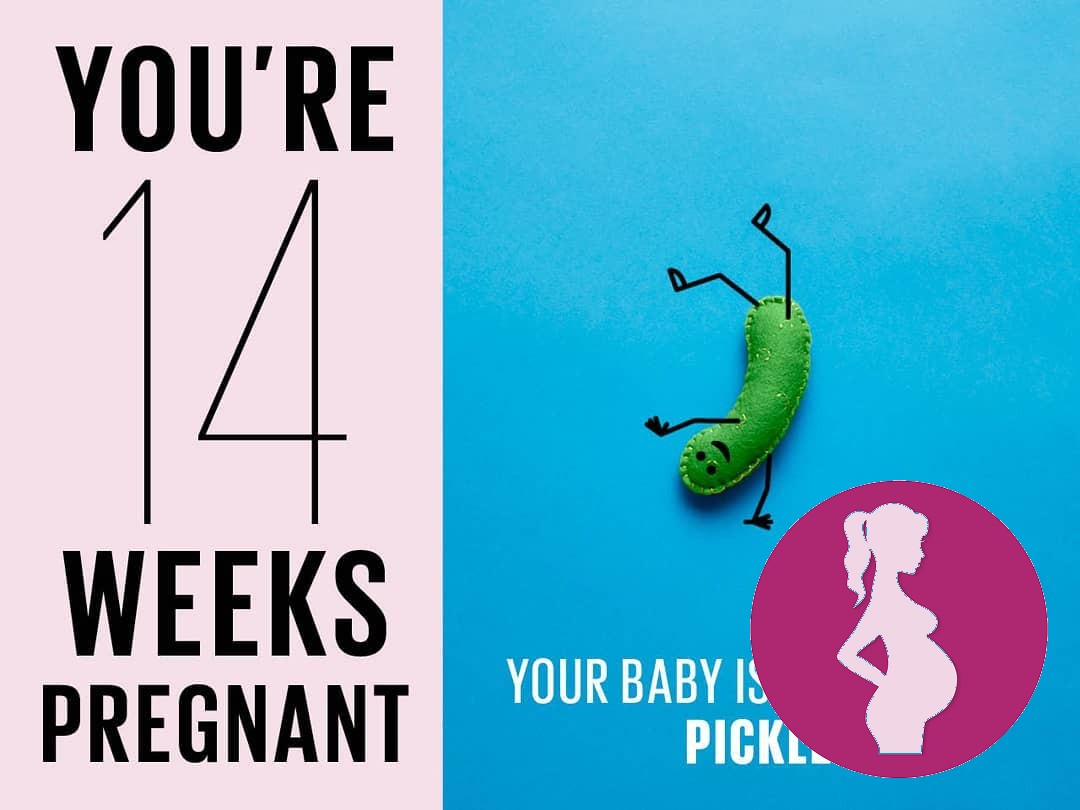
14 weekssecond trimester and I still havent taken any weekly photos. I compared this pregnancy to …

14 weeks/second trimester and I still haven’t taken any weekly photos. I compared this pregnancy to my first and I look to be about the size that I was at 19 weeks. I didn’t show much with him then so its not hugely noticeable (I’m in that chubby tymmy looking stage) but I am bigger sooner with this one. I may be able to get to my 20 week scan before it becomes super noticeable but I may buy a big cardigan just in case 😉. My nausea has ceased for the most part and instead I need to eat every other hour at the latest. I’m eating a lot better but that and my water intake is not back to normal yet. My energy level has not increased. I still nap at least a couple hours right in the freaking middle of the day and again in the evening. I can’t stop myself. The worst thing is that migraines have started up daily, I toss and turn at night and gas. Oh my gosh. I finally took an off brand tylenol for my head and then felt ill after. I can’t win there but baby was well last checked so I’m doing good. I still worry but we’re good so far. Going to go nap now. .
.
.
.
.
.
.
.
.
#ivfjourney #ttcsisters #ttccommunity #secondtrimester #ivf #infertility #3dembryotransfer #3daytransfer #14weeks #earlypregnancy #pickle #naptime #wheresmyenergy #notmyphoto

Was giving birth safer a generation ago What can I do to not be a maternal mortality rate statist

You wanted to know why maternal mortality rates are higher in the United States now than they were decades ago. And that’s a really good question, and the answer is multifaceted, and there’s a few different reasons why these rates are higher. Statistics show that, in 1990, there were about 10 per 100,000 maternal deaths related to pregnancy, labor and delivery, or the postpartum period – basically, related to the fact that the woman was having a baby. In 2014, it was 18 deaths per 100,000. And the biggest explanation for this difference is the fact that coding and tracking has gotten better, and so that may be the reason why the statistics show that it’s gone up. In reality, it may not have, but there are some other factors to consider.

For example, as the decades have gone on, women have begun to have children later in their years, and research shows that a woman is more likely to die during pregnancy, or child birth, or during the postpartum period if she is less than 20 years of age or over 35 years of age. So maternal age does play a roll. Obesity and other health problems also increase a woman’s chances of having complications that can lead to death, and obesity rates are on the rise in the United States.

There is something called “The 3 Delays Model” that has also been used to explain why maternal death may happen. And basically, in short, there’s 3 circumstances where delay may lead to greater chance for maternal death. The 1st is a delay in seeking care. A woman may not have the education she needs in order to know when to get checked out or she may not have access to prenatal care. The 2nd is a delay in actually getting to the place where she’s going to receive treatment, and so this may involve living far away from a hospital or not having good transportation. The 3rd delay is the type of delay that may happen in the hospital based on misdiagnosis or lack of resources. And so all of these things may be contributing factors to it.

On the list of problems that cause maternal death are hemorrhage, cardiovascular conditions, infection, preeclampsia, embolism, maternal homicide, and stroke. There are others, but the take-away message of all of this is that, in the end, the chances of having a healthy pregnancy are actually still really high, and there are things that you can do to decrease the likelihood of becoming a statistic. Go into pregnancy being as healthy as possible, and this also includes being at a healthy weight, and this means planning for pregnancy. Talk with your doctor before you’re going to try to conceive to make sure that you’re as healthy as possible. And if there are any conditions that need to be managed or treated before you get pregnant, the time to do that is before pregnancy, not during. And they can also talk with you about your BMI, or body mass index, to make sure that it’s within a normal range. And if it’s not, they can counsel you on how you can lose weight safely before you conceive.

Once you do get pregnant, make your first prenatal appointment by 13 weeks gestation and plan on at least 13 visits throughout the pregnancy. Prenatal care has been shown to increase the chances of a woman and her baby being as healthy as possible, because it allows a provider to identify women who are at risk and allows them to monitor them appropriately. If in between prenatal appointments you have concerns or questions or you’ve observed something that you’re just not sure about, talk with your OB provider about it. There’s no way to know if it’s concerning or not without talking with them, so they’re always available and they’re a great resource. Don’t ever hesitate to call them if you have questions or concerns.

The last thing that you can do is plan on delivering at a hospital that has resources capable of managing an emergent situation if one does arise. If you have more questions or concerns about your circumstances, don’t hesitate to talk with your doctor who can give you tailored information and advice based on their knowledge of your current situation and your past pregnancy history. If you have more questions in the future for me, feel free to ask them on our Intermountain Moms Facebook and Instagram pages, and recommend us to your friends and family too.