We care about YOU. We are here to help support your health and well being. Call us today or book online to make your free pregnancy confirmation or STD testing appointment in Springfield or Worcester, MA!
S: 413-351-0070
W: 508-438-0144

We care about YOU. We are here to help support your health and well being. Call us today or book online to make your free pregnancy confirmation or STD testing appointment in Springfield or Worcester, MA!
S: 413-351-0070
W: 508-438-0144
The process of trying to conceive or have a baby can be a time filled with a lot of emotion. You might feel like you’re on an emotional roller coaster as you wait each month to see if your period is going to start. Don’t worry if you’ve only been trying for a couple of months, because on average, most couples have to try for about 6 months or so. Thankfully those who aren’t pregnant by 6 months are usually pregnant by a year. If you’ve been trying for a year or more, it’s time to see a specialist. The doctor that you see will likely ask you and your partner questions about your lifestyle, because sometimes simple lifestyle changes can help you get pregnant. They’ll ask you about your health history, perform an exam, and then decide (based on all the information they’ve gathered) what treatments might be best for you in order to increase your chances of having a baby.
When it comes to infertility there are a lot of different things that can cause it. In about 50% of cases, it has to do with the female’s reproductive system. In most instances, these problems are related to blocked fallopian tubes and there is a procedure that can fix that. Or it can just be that the woman isn’t ovulating and there is medication for that. If the doctor thinks it’s one of these things, they might try those treatments. In 35% of cases, it has to do with the male reproductive system, and in most cases, those problems are related to a low sperm count or abnormal sperm, and depending on the situation, there might be things that they can do about that as well. It can be a combination of issues or, unfortunately for about 15% of couples, they never really know the cause. The doctor might try a few different things to rule out possible scenarios and if those things don’t work, then they go to more costly and more emotionally invested procedures like in vitro fertilization and things like that.
Thankfully though, with treatment, most couples are able to have a baby of their own. Again, an evaluation from a doctor (if you’ve been trying for a year or more) is the best way to go about it. Again, they can talk to you and decide what treatment would be best. Good luck with everything, and if you have any other questions for me the future, feel free to ask them on our Facebook page at http://www.facebook.com/intermountainmoms and recommend us to your friends and family too.
So, will it be 7th time lucky?? I can’t actually believe it to be honest. This has never happened to me before as usually it has taken a long time between pregnancies to see another positive test.
I’m not even going to go to the doctors yet so will leave it a couple of weeks and see what happens.
I’m going to stop using my @ovusense monitor now as otherwise I’ll end up stressing over tiny changes of temperature. We had just signed up for another year subscription so really hoping that I don’t need to use it ever again!! Would really recommend it to anyone though as it’s been invaluable.
I’m so grateful but so apprehensive at the same time as I never seem to stay pregnant for long. Keeping everything crossed that it is finally our turn 🤞🤞🤞#ovusense #fertilityjourney #pregnancytest #infertility #7thtimelucky #earlypregnancy #infertilityjourney #ttc #ttcover40 #ttccommunity
Generally speaking, milk production is a supply-and-demand type of function, meaning the more you nurse or pump, the more milk your body will make, but in the short term right after delivering a baby, it’s actually hormone driven. During pregnancy, hormone changes in your body were ramping up the milk-making factory and getting your body ready to make milk, and then after the placenta is delivered (whether it’s by vaginal delivery or by C-section), that is basically turning the milk-making factory switch on and so milk starts to be produced.
You wanted to know what you can do to stop production after delivery, because you’re planning on formula-feeding, and this is a good question. You do need to plan on it taking at least a few days for milk production to cease, because it’s hormone driven. And generally speaking, after delivery, a mother will breastfeed and pump to stimulate production, but you want to do the opposite if you don’t want to encourage that production. But you may have to pump just enough or manually express just enough milk to help your body feel comfortable as it get’s the message that it doesn’t need to make more milk. This will mean that every few hours, you may need to manually express or pump off just enough to the point of feeling comfortable, but not to the point where you empty the breast, because when the breasts are emptied, that’s when it gets the signal to fill them back up again.
Ice packs can also help, so you can use cold packs, or gel packs, or even just a bag of frozen vegetables and place one on each breast after you’ve manually pumped or expressed a little bit of milk every few hours. And you’ll only have to do that probably for the first couple of days. And then as time goes on, you’ll slowly want to increase the amount of time you go in between letting off a little bit to the point of feeling comfortable, and just be really careful to not empty the breast when you do that. Again, just take off enough to the point of feeling comfortable. Instead of using ice packs or frozen vegetables, you can also use cabbage leaves, and you just wash them, and you strip the vein out, and you put them in the fridge and let them get cold, but cold or not, they can actually help to suppress milk production. So you just stick one in each side, just like you would a nursing pad, and let them sit for a couple of hours. At that point, they’ll start to wilt and then you can replace them with new ones.
The reason why this process needs to be gradual and slow is that if you just did nothing about it and the milk is being produced, it puts you at risk for engorgement, and clogged ducts, and a breast infection called mastitis, and you want to avoid these things at all costs. So again, without sending the message to your body to make milk, just incrementally empty the breast to the point of feeling comfortable, and after a few days (maybe a week), your body will get the message that it doesn’t need to make milk anymore. If a month goes by and you can still manually express a little bit of breast milk by squeezing the breast or massaging it gently, don’t be alarmed. That’s pretty normal.
If you do start to feel a little uncomfortable during the process of suppressing milk production, you can also take ibuprofen as long as your doctor says that that’s okay for you to take. This can help with that discomfort and swelling that you might feel. Also avoid any breast stimulation while you’re trying to suppress milk production, and this will involve wearing a good supporting bra – one that’s not too loose, not too tight. Avoid binding the breast, because that’s what your mom or your grandmother may suggest, but research tells us that that’s not the best thing to do, so just a good tight-fitting bra, a sports bra would be a good example.
If a month goes by, or even a few months, and you find that you can manually express a little bit of breast milk, that’s okay. That’s pretty normal after having a baby. Don’t be alarmed unless it has changed color or unless you notice any irregularities or differences in the breast tissue, areola, or nipple, in which case, you would want to bring it up with your doctor. If you have more questions in the future for me, feel free to ask them at Intermountain Moms on either our Facebook or Instagram pages, and recommend us to your friends and family too.
This is hard. I pride myself on being an open book. I pride myself on making sure my story is heard because I know I can’t be alone. Somewhere, there’s a woman or a couple who has experienced this and feels like they’ve got nowhere to turn. But you do, my friend. You do. •
On May 20th, the day my dreaded period was due, we got a positive pregnancy test and had it confirmed by my doctor the same day – we also had blood tests done twice that week to make sure my levels were rising appropriately (they were, yay!). We scheduled our 8wk ultrasound and eagerly waited, feeling every bit of morning sickness, exhaustion, almost unbearably sore breasts, and all of the other amazing things we’ve been waiting for and dying to experience ourselves for so long.
When the time came for our 8wk ultrasound, we were shocked and confused to see a developing gestational sac… with absolutely nothing inside.
They told me it was probably a blighted ovum, but that we’d do blood tests and another ultrasound to confirm further. That was June 20, my follow-up ultrasound was July 1. My hormone levels remained normal for how far along I was, but the sac was still empty and my body isn’t passing it on its own. I was still having symptoms because the sac was still there, producing the hormones, so I was (am) constantly reminded of a baby that will never come to be.
Yesterday, I had to have a D&C to help clear everything from my uterus. I’m sore. I’m a bit woozy. I’m sad. I’m scared. I’m… empty.
It was our choice to move forward with the D&C, rather than waiting longer for my body to pass it naturally. I felt the trauma would be easier to cope with if I didn’t have to do it myself, and we weren’t willing to have me hospitalized if anything went south while the sac was still in there. I still don’t know if it was the right decision, but I am grateful to have had the choice to decide what to do with my own body.
It’s a shitty feeling, not being able to trust your own body. This is an absolute nightmare and I can’t believe my body would play such a cruel trick on us. I wouldn’t wish this on my worst enemy. ** continued in comments
You wanted to know if it’s normal for your 5-year-old to snore really loud. And this is actually something that I would bring to the attention of your pediatrician. When a child snores, if they have periods of time during sleep when their breathing pauses, if they gasp, if they snort, or if they have behavioral issues during the day, they may have a condition called obstructive sleep apnea, and sometimes it’s due to enlarged tonsils. And a doctor can tell by just looking in a child’s throat and asking the parent more specific questions about their concerns and observations, and then they can determine if further investigation and intervention is warranted from there. If you have more questions in the future for me, feel free to ask them at Intermountain Moms on either our Facebook or Instagram pages, and recommend us to your friends and family too.
Currently 6weeks + 2. I have another scan in a week to see if there’s a heart beat. A viable pregnancy. I’m so nervous, scared and fragile.
My nausea is dreadful, headache and breast pain like never before. I’ve had light to mild spotting on and off now, every time it’s heavier or darker I worry, despite being told it’s OK.
Last time this happened I miscarried, I hope it’s OK.
All I can do is hope 🤞🤞🤞🤞 #pcos #fertility #accupuncture #pcosdiet #pcoslifestyle #fertilityacupuncture #leanpcosladies #leanpcos #fertilityuk #fertilityfood #infertilitysucks #pcosuk #periodproblems #seedcycling #ttcuk #ttc #earlypregnancy #leanpcosuk #naturalpregnancy
I was diagnosed with heart failure right after the birth of my baby on November 2, 2009. While I was pregnant, I had some symptoms that I just passed off as being pregnant. I was short of breath, especially if I bent over. I had pain in my ribs, under my ribs. I had a cold that wouldn’t go away. In fact, I’d had 2 sinus infections and I was nauseated the whole pregnancy. And then after I had her, I realized something was wrong when I got up to go to the bathroom and I was just really short of breath. So I first noticed these probably about a month before I had her. I noticed that I was really short of breath and I was just thinking that it was because I was “big pregnant”, I’m carrying her higher, maybe closer to my lungs. Nausea, that’s common with pregnancy. I did have wheezing. If I was laying flat, I was wheezing, and I had just had a cold, so I figured it was just part of the cold.
So after the nurse knew that I was really having a hard time breathing, she called the doctor. It was probably 1:00 in the morning and he ordered a CAT scan. And I remember having the CAT scan, I had a hard time laying flat, because I couldn’t breathe. And I said, “How long do I have to hold my breath?” And they said, “Oh, the scan is only about 9 seconds.” And I really struggled just trying to hold my breath for the 9 seconds. And they did an echo [echocardiogram] earlier the next morning and the cardiologist didn’t come in until later that night, but he said to me, “I really recommend you don’t have any more kids, because it’s your heart.” He said, “You’re in heart failure.”
So my advice for women, especially women that are pregnant, if there’s symptoms like the shortness of breath, things that are unusual, if you have a cold for very long, probably the pain that I had in my ribs – being pregnant, I think a lot of these symptoms were just brushed off. And being in the medical field, I didn’t even know that this was something that could happen, that you could have heart failure due to your pregnancy, and I think a lot of women don’t know that and don’t understand that. And if there are symptoms that you have that you don’t feel are normal, talk to your doctor. Let them know the way that you’re feeling and that you don’t think that it’s something that you would normally have, because I feel like if I wouldn’t have said anything to my nurse, who knows what would have happened? I could have gone home and died, not being on the heart medication to help my heart get better.
Since my heart transplant 9 years ago, April 29, 2010, I’ve gone back to work. It’s been amazing. I feel like myself again. Sometimes I’m still in denial that I ever had a heart transplant. I am reminded almost every day though when I take my medication that I have to take twice daily, the immunosuppressants, but it’s been a great gift and one that I’m very thankful for.
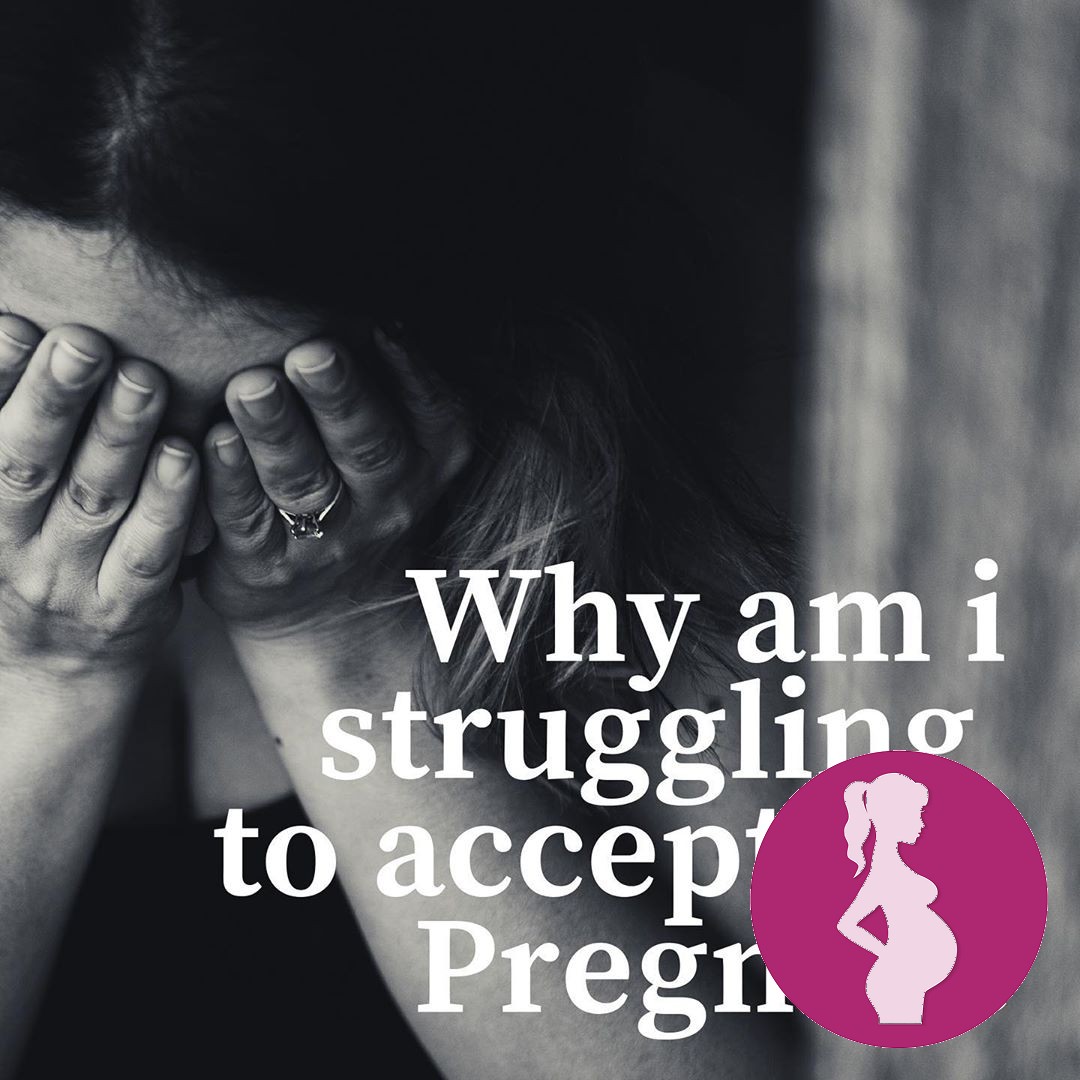
OMG I am so lucky and excited to be pregnant but with my 12 week scan approaching… I can’t seem to come to terms with accepting it!
.
I worry everything is going to go wrong as we have been so unlucky with our fertility until IVF!
.
I have always suffered from anxiety and gone cold turkey from meds since finding I’m pregnant so again not sure if this is affecting me! Or the lack of sleep?
.
Today I walked into a shop to top up on Pregnancy Vitamins and couldn’t bring myself to buy them until I have had my 12 week scan – mainly as I keep needing reassurance it is real!
.
Am I crazy? 🤦🏼♀️
.
#pupo #earlypregnancy #anxietyfighter #anxiety #pregnancyanxiety #ivf #ivfjourney #ivfwarrior #ivfpregnancy #ivfsisters #infertility #infertilityjourney #fertilityawareness #ivfblogger #pregnancyblogger #pregnancyblog #worries #acceptance #fertilitysupport #ttc #ttcishard #ivfcommunity #ivfstrongertogether
You wanted to know if losing weight will affect ovulation. And actually, there is a possibility that it could. But on the reverse, if a woman is overweight to the point where that’s contributing to her not ovulating, losing weight might help, but it’s never a good idea to lose too much weight. Fat is essentially an endocrine organ. It functions as one in the sense that it affects hormone levels in our body, and too much or too little fat (or adipose tissue) can affect hormone levels to the point where ovulation doesn’t happen. If a woman is 10% below her ideal body weight, then that’s when it might start affecting ovulation. And this can happen because of excessive exercise or because of nutrition deficiencies. And sometimes a woman isn’t excessively exercising, but may have nutritional deficiencies because of diet restrictions or because of illness. For example, celiac disease can cause nutritional deficiencies that can affect ovulation as well. If you’re having irregular periods or you have more specific questions about it, talk with your doctor who can give you more tailored information and advice. And if you have more questions in the future for me, feel free to ask them at Intermountain Moms on either our Facebook or Instagram pages, and recommend us to your friends and family too.